
1Choose a time that suits you.
2Tell each other if plans change.
3Keep another trusted contact on paper.
4If there is immediate danger, seek emergency help.
Choose a routine together
Ask which kind of contact your parent actually wants: a call, a message, or an agreed visit. Fit it around their ordinary day. A daily call may suit one family; another may prefer a different arrangement. There is no universal interval that proves someone is safe.
Write down what counts as a reply and what happens when either person is busy. Avoid turning a casual habit into a promise of constant supervision. This is a family agreement, not a staffed alarm service.
Arrange a backup who has agreed to help
Choose a second person with your parent’s agreement, then ask that person whether and when they can help. Record a phone number and their actual availability. Living nearby does not automatically make a neighbor responsible for checking in.
If someone holds a spare key, agree separately who may use it and under what circumstances. Do not write entry codes or key hiding places on a sheet you will share widely. Access permissions should be clear without exposing the home.
Write the sequence for an unexpected missed contact
Record who tries the usual phone, who tries the agreed alternative, and who contacts the backup person. Include how your family will decide the next step; do not copy an arbitrary waiting time from the internet. If there is reason to believe someone is in immediate danger, contact local emergency services without waiting for the routine sequence.
Once contact is made, one person tells everyone involved so several relatives do not keep calling or making duplicate visits. Note whether the plan worked and whether a number or arrangement needs changing.
Recheck after a change
Review the card after a holiday, a changed phone number, a helper’s move, or a new routine. Ask the backup person again if the request has changed. A name written on last year’s sheet is not confirmation that help is still available.
For ongoing support that family cannot provide, ask local aging services what is available and what it covers. In the US, the Eldercare Locator can help locate services. Confirm fees, hours, and eligibility with the provider instead of assuming a check-in service includes emergency response.
Use the worksheet for one real situation
Open the matching sheet below. Review the preparation checklist, then write the information your family needs in the labeled fields. Leave unknown details blank and record who can clarify them.
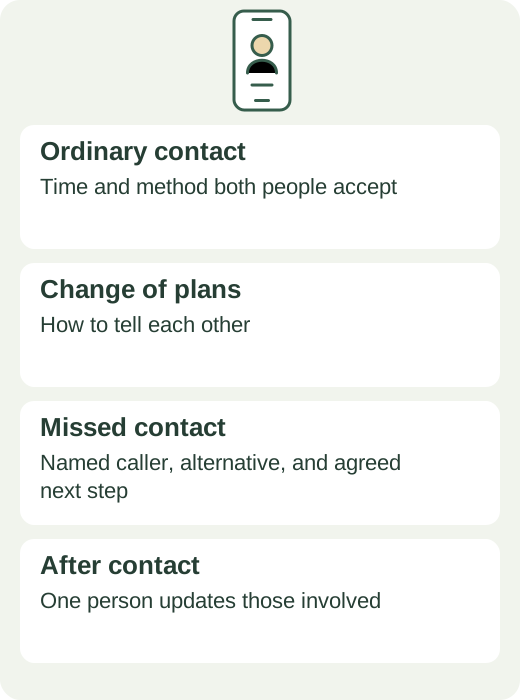
Ordinary contact
Time and method both people accept
Change of plans
How to tell each other
Missed contact
Named caller, alternative, and agreed next step
After contact
One person updates those involved
Print a blank copy to write by hand, or fill it in on this page before printing. Give the completed copy only to people your parent has agreed may see it. The checklist records preparation; it does not score safety or verify a medical decision.
Common questions
How long should we wait before asking for help?
There is no universal safe waiting time. Agree a plan for your circumstances; if you believe there is immediate danger, seek emergency help at once.
Should we share the card in a public group?
No. Give contact details only to the people who need them, with permission. Keep access information separate.
Does a check-in replace professional support?
No. It is only a communication arrangement. Discuss medical concerns with a doctor and ask local services about practical support.
Source and scope
Background on sharing family responsibilities. The contact agreement and handover examples here are original templates, not a monitoring service.
The examples and worksheets are original household planning tools. For symptoms, medication decisions, or other medical questions, contact a doctor.