
1Say what you want help with.
2Tell the next person what is already done.
3Point out the things still waiting.
4Keep private information within the agreed group.
Start with your parent’s wishes
Ask what your parent wants help with and what they want to keep doing themselves. Agree who may receive the handover. Sharing a home key, medical document, or appointment detail needs a separate conversation; family membership alone is not permission to circulate everything.
Keep the handover focused on the next visit or agreed period. It should not become a permanent record of every small choice your parent makes. Include preferences that help someone offer support respectfully, such as calling before arriving.
Separate done, pending, and unknown
Use concrete language: “The repair visit is booked for Friday; confirmation is in the folder.” A booking is not a completed repair. If you do not know whether something happened, mark it as unknown and name the person to ask.
For money or purchases, keep the receipt reference and the agreement about payment. Do not publish bank information or identity numbers in the handover. If there is a medical question, pass it to the doctor rather than asking the next helper to interpret it.
Name the next person and confirm they can do it
Ask the person who is taking over to confirm the arrangement and the time they are available. “Someone will pick up the paperwork” leaves a gap. “Alex has agreed to collect it on Tuesday” gives everyone a shared understanding without creating a complicated task system.
Agree what to do if the person becomes unavailable. A replacement needs to accept the role and receive the necessary information with your parent’s permission. Do not leave a task marked covered simply because a name is still on the sheet.
Close the handover with a quick check
Ask the next helper to identify the appointment or task, the relevant document, and the unanswered question. This is a check that the note is clear, not a quiz. Correct the note together if either person understood something differently.
Write the handover date and keep only the current sheet in the usual place. Store or dispose of older copies privately. If support is becoming too much for one relative, discuss a realistic change in arrangements rather than silently adding more to the list.
Use the worksheet for one real situation
Open the matching sheet below. Review the preparation checklist, then write the information your family needs in the labeled fields. Leave unknown details blank and record who can clarify them.
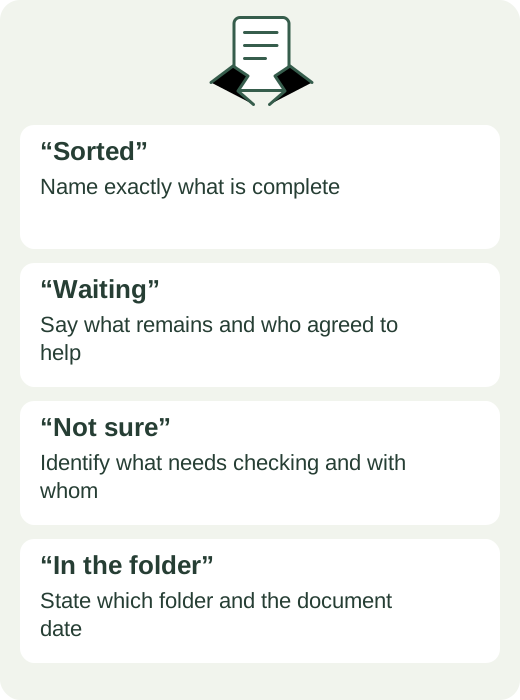
“Sorted”
Name exactly what is complete
“Waiting”
Say what remains and who agreed to help
“Not sure”
Identify what needs checking and with whom
“In the folder”
State which folder and the document date
Print a blank copy to write by hand, or fill it in on this page before printing. Give the completed copy only to people your parent has agreed may see it. The checklist records preparation; it does not score safety or verify a medical decision.
Common questions
Can the family chat be enough?
Yes, if the current information is easy to find and everyone involved agrees to share it there. A short dated note can prevent searching through old messages.
What if nobody can take over?
Say so explicitly and discuss a new arrangement. Do not write that care is covered before someone has actually agreed.
Should medical decisions go on the sheet?
No. Record the question for the doctor. The sheet is for communication, not clinical decisions.
Source and scope
Background on sharing family responsibilities. The contact agreement and handover examples here are original templates, not a monitoring service.
The examples and worksheets are original household planning tools. For symptoms, medication decisions, or other medical questions, contact a doctor.