THE QUICK TAKE
- Describe the bathroom task before choosing a location.
- Have anchoring and installation assessed by a qualified professional.
- Do not assume a towel rail or suction-mounted product supports transfers.

Identify the movement a bathroom grab bar must support
Ask your parent which part of using the bathroom is difficult: getting into a bathing area, standing from the toilet, or moving between positions. These are different tasks. A photograph of a hotel bathroom cannot tell you which location suits your parent. Ask the healthcare team about occupational therapy if the task involves balance or transfers.
Describe the usual routine without asking for a risky demonstration. Note existing supports, whether help is currently needed, and which hand normally reaches for an object. If your parent uses the towel rail or taps for support, share that information with the assessor. Do not abruptly remove their usual contact point without discussing a suitable plan.
Mayo Clinic identifies grab bars among bathroom fall prevention measures. That supports considering the category, not choosing a particular product or location without assessing the actual setting. Keep the goal in the project notes so purchasing decisions stay connected to a task.
Ask about placement, reach, and room clearance
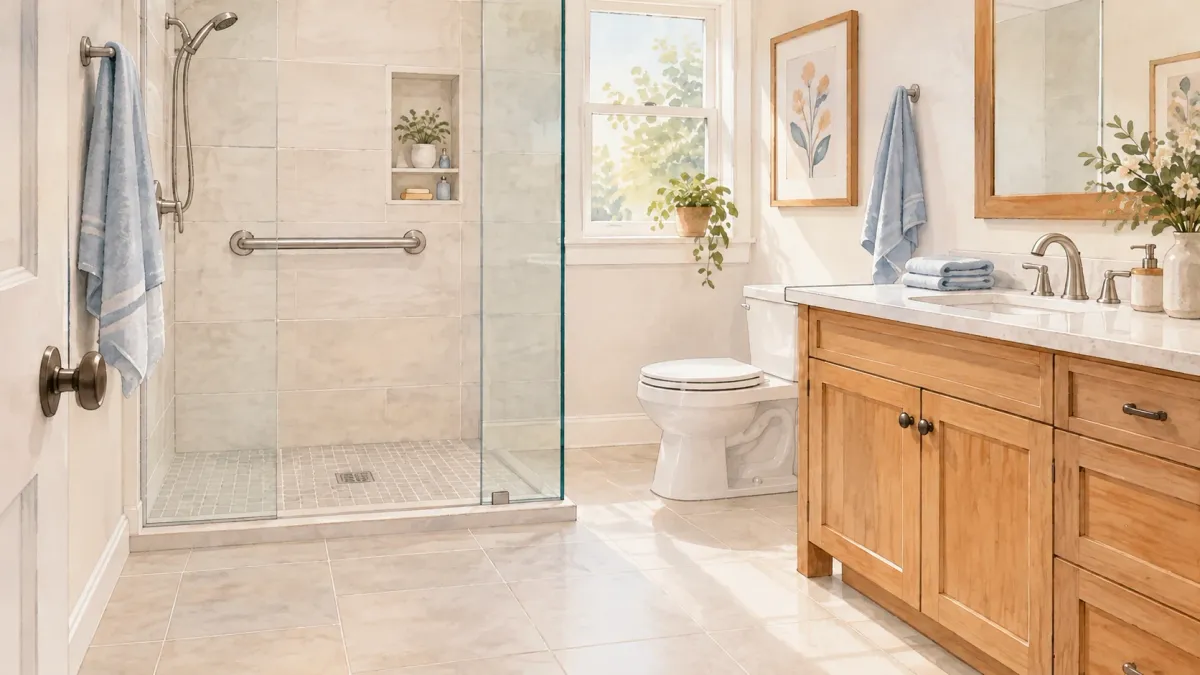
Placement needs to work with the person and with other bathroom features. A bar may compete with a shower control, door, seat, or storage item. Ask the assessor and installer how those parts fit together. A decorative shelf installed later should not make the intended support harder to reach or use.
Access Board guidance for covered accessible bathing facilities shows that grab bars, seats, controls, and clearances are planned as a system. Its diagrams are useful professional references; they are not an automatic prescription for every private home. Ask the installer which local requirements apply and the therapist what the individual's task requires.
Before any holes are drilled, clarify the agreed location in writing and identify who resolves uncertainties. If the clinical recommendation and the structure conflict, pause for discussion between the appropriate professionals. Do not let an installer guess at placement because a family member cannot reach the assessor that day.
Movement and reach
- Person to involve
- Occupational therapist or appropriate clinician
- Record
- Task and individualized recommendation
Wall structure and anchoring
- Person to involve
- Qualified installer
- Record
- Suitable attachment approach
Local requirements
- Person to involve
- Qualified installer or relevant authority
- Record
- Requirements applicable to this work
Product limitations
- Person to involve
- Manufacturer and assessor
- Record
- Instructions and intended use
Use after installation
- Person to involve
- Appropriate professional
- Record
- Any teaching or follow-up needed
Compare products without confusing convenience with support
Ask what the selected bar is intended to do, which mounting conditions it requires, and what limitations the manufacturer states. An attractive finish or a high customer rating is not evidence that the attachment suits the wall. Keep the exact model information and complete instructions; similar-looking products may have different requirements.
Fixed bars require suitable anchoring. Suction-mounted products have their own surface and use restrictions; do not assume they are suitable for bearing body weight or supporting a transfer. Read the exact limitations and ask a professional whether the product meets the intended need. The fact that a device can be attached without drilling does not establish equivalence to a professionally installed support.
A towel rail, soap dish, or ordinary fixture is not a substitute for a support designed and installed for the task. Avoid makeshift additions or modifications to a product. If rental restrictions make permanent work difficult, discuss the options with the property owner and assessor rather than selecting a questionable substitute by default.
Treat installation as part of the purchase
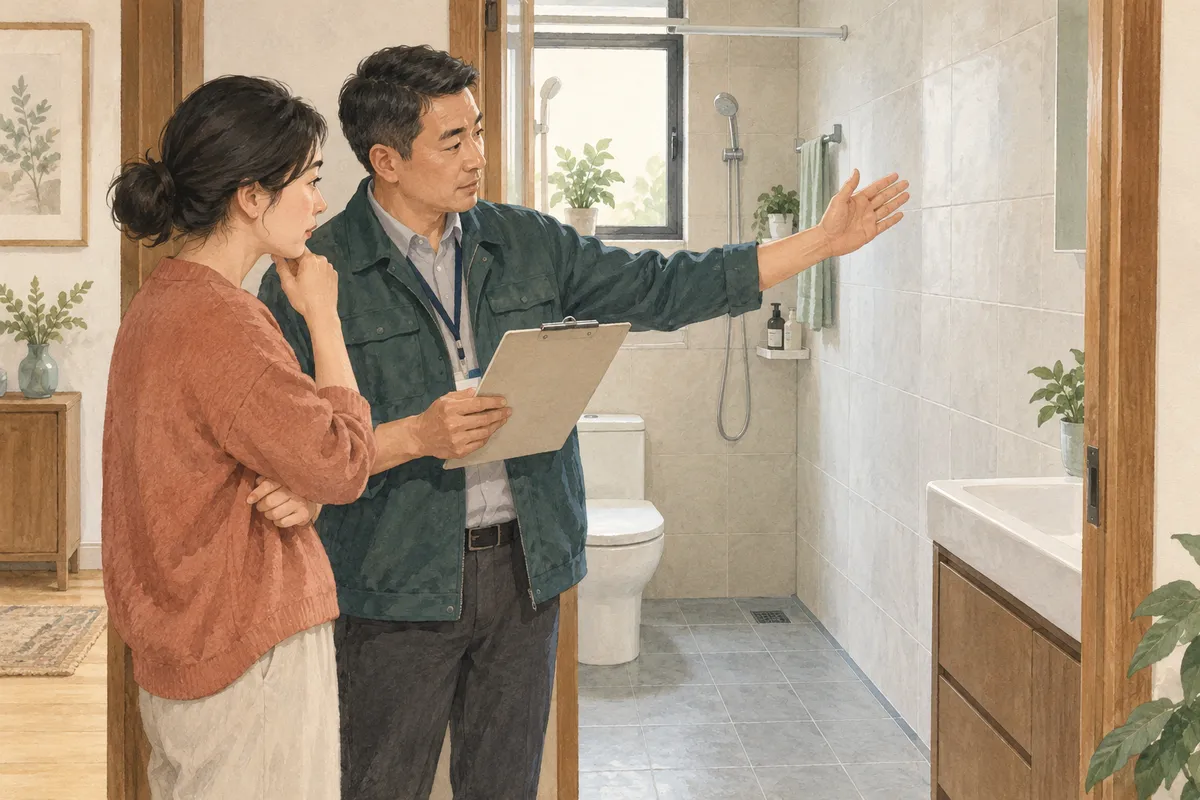
Ask prospective installers about relevant experience and how they will assess the wall or surround. Clarify who selects fasteners, checks concealed services, and handles sealing or other finish work. These are questions to ask, not instructions to perform yourself. The final approach should follow the product instructions and requirements appropriate to the setting.
Get a written scope and estimate, including the products and work to be supplied. If the family is ordering the bar separately, confirm suitability before purchase. Decide who will be present and how access will be arranged with your parent. Keep the original recommendations available without sharing unrelated private medical information.
Before handover, ask the installer to explain the completed work, permitted use, and signs that should prompt a service call. Do not ask your parent to yank on a new bar as a load test. When teaching about a movement is needed, arrange the appropriate professional input; installation competence and transfer training are separate roles.

Review the whole bathroom after the work
Check that the installation has not displaced towels, toiletries, or other objects into an awkward location. Ask your parent whether the intended routine is more manageable. If they cannot comfortably use the arrangement, request advice rather than adding a second device at random.
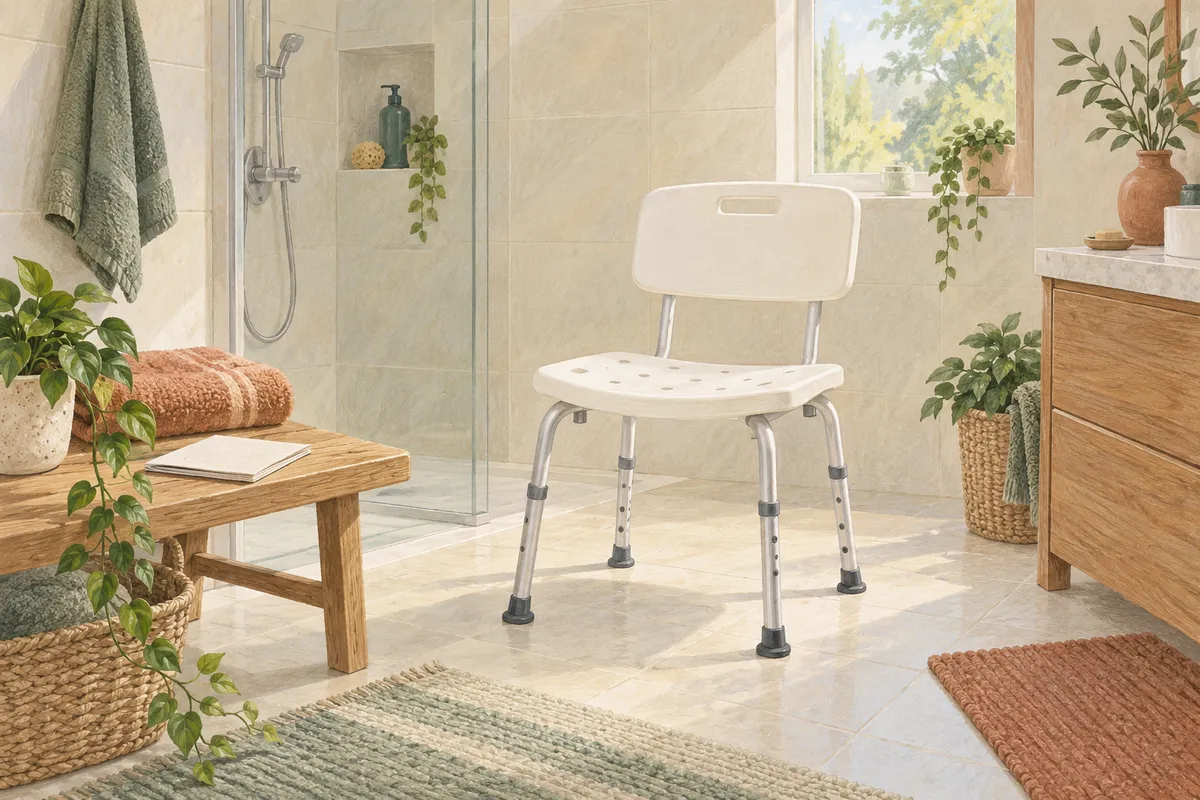
Keep the model, instructions, installer details, and any maintenance guidance in a household record. Report movement, damage, or a loose fitting to the appropriate professional and follow their advice about use. Review the setup again if a shower chair, door, or other significant feature changes.
Bathroom grab bars belong within a bathroom plan that also considers lighting, wet surfaces, seating, and the person's needs. Complete the project by recording what the bar was intended to support and how follow-up will happen. A finished installation is useful progress; its suitability still depends on the daily routine.
Compare grab-bar quotes for the same complete job
Supplying a bar is different from checking the wall and completing an installation. CDC recommends bathroom grab bars; its checklist does not specify a universal location, mounting method or individual product. This table helps families ask what the job includes without providing installation instructions.
Give providers the same agreed scope and ask what they must inspect. Keep the clinical question about the parent's activity separate from the installer's question about the building surface. Do not choose a location from an illustration on this site. Ask who coordinates if recommendations and wall conditions do not match, and how the family receives care and maintenance information for the installed product.
One quote covers the bar only
- Next action
- Request an itemized scope for site assessment, installation and finishing work.
- Check before calling it done
- Included tasks and possible additional work are explicit.
The wall conditions have not been inspected
- Next action
- Ask what must be verified before confirming the job.
- Check before calling it done
- Unknown surface or mounting requirements are not hidden behind a product price.
Location is proposed without discussing the parent's task
- Next action
- Ask whether individual professional input is needed before agreement.
- Check before calling it done
- The activity question and construction feasibility are both addressed.
The quote ends at installation
- Next action
- Ask about handover instructions, maintenance information and the fault contact.
- Check before calling it done
- The family has product details and knows whom to contact afterward.
Safety guidance: CDC: Check for Safety home checklist. Family examples and completion checks are editorial planning suggestions.
Compare what each installation quote includes
Ask each installer to quote against the same agreed task and placement recommendation. A cheaper price may omit the assessment visit, product supply, finish work, or follow-up. Request a written explanation of what is included and what would require a revised estimate. This is an editorial purchasing checklist, not an installation specification.
Confirm who supplies the exact product and who checks that it suits the assessed structure. Ask how uncertainty about the wall or agreed location will be handled before work proceeds. Do not authorize substitution solely because another bar looks similar; clarify its instructions and suitability with the relevant professional.
Discuss scheduling, access, and any disruption with your parent. Record who will answer questions on the day and who can approve changes to the scope or price. An installer should not need to infer the intended location from a family message that says put it wherever it fits.
At handover, collect the model details, instructions, installer contact, and explanation of maintenance or service concerns. Keep unfinished issues listed separately from payment paperwork. Ask the appropriate professional about use if the movement requires teaching; a polished installation alone does not establish an individualized transfer plan.
Product and work included
- Record
- Exact model and scope
Uncertain structure or location
- Record
- Who resolves the question?
Changes to work
- Record
- Who approves revised cost?
Aftercare
- Record
- Contact and relevant instructions
Fill in the template, then copy it to your own document. Edits stay on this page only and are lost when you reload or leave. Avoid private health details.
Common questions
What height should a bathroom grab bar be?
This guide gives no universal dimension. Ask an appropriate professional about the person's task and a qualified installer about applicable requirements and anchoring. Public accessibility diagrams do not alone determine an individual home setup.
Can suction grab bars replace fixed bars?
Do not assume that. Check the exact manufacturer's restrictions and seek advice about the intended support or transfer. Convenience of attachment does not establish suitability.
Can a family member install the bar?
The work needs appropriate competence, knowledge of the structure, and compliance with product instructions and applicable requirements. Use qualified help when those conditions cannot be established.
Sources & further reading
These public resources inform the safety guidance in this article. The household planning examples are our editorial suggestions.
- Mayo Clinic: Occupational Therapist's Guide to Preventing Falls in the Bathroom
- US Access Board: ADA Guide to Bathing Rooms
- Mayo Clinic: Fall Prevention
Overview of home hazards, lighting, footwear, and questions for the healthcare team.
Educational guidance, not a clinical assessment or personalized medical advice. This article has not been individually reviewed by a licensed clinician. Read our editorial policy.