
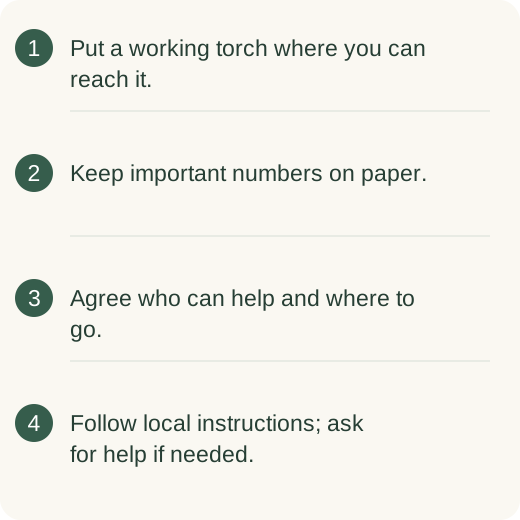
1Put a working torch where you can reach it.
2Keep important numbers on paper.
3Agree who can help and where to go.
4Follow local instructions; ask for help if needed.
List what stops working without power
Walk through the ordinary day together: lighting, phone charging, internet, lifts, entry systems, and any other powered equipment your parent relies on. Note which services have a backup and ask the building manager or supplier about anything uncertain. Do not assume a device has backup power because it has a battery symbol.
If medical equipment depends on electricity, contact the clinician and equipment supplier in advance for a specific outage plan. This guide cannot specify substitute equipment, battery run time, or how to manage treatment during an outage.
Make a small, reachable supply place
Keep a working battery torch and compatible spare batteries or a charged light together. Add charging equipment appropriate to the phone, a paper contact card, and supplies recommended by local emergency guidance. Choose a place your parent can reach without climbing or searching through deep cupboards.
Try the torch and charging cable while the power is on. Check storage and replacement instructions on the products. A box full of unfamiliar equipment is less useful than a few items your parent has already used.
Agree how you will get information and help
Write the utility or building contact, a nearby trusted person, and the local emergency information source on paper. Agree how the family will reconnect if messaging or home internet is unavailable. A saved web link alone may be hard to use during an outage.
Discuss a possible place to stay if the home becomes unsuitable and confirm that the person or service can help. Think through transport and access before promising a move. Follow official evacuation instructions; do not wait for a family worksheet when urgent help is needed.
Check the kit when the household changes
Choose a reminder that fits your household to check the light, chargers, contact numbers, and dated supplies. Replace or maintain items according to their instructions. Revisit the plan after a move, a new device, or a change in who can help.
During an outage, use official updates and qualified help for electrical faults. Do not attempt a wiring repair or improvise power connections from this guide. Keep the household plan focused on preparation, communication, and getting appropriate help.
Use the worksheet for one real situation
Open the matching sheet below. Review the preparation checklist, then write the information your family needs in the labeled fields. Leave unknown details blank and record who can clarify them.
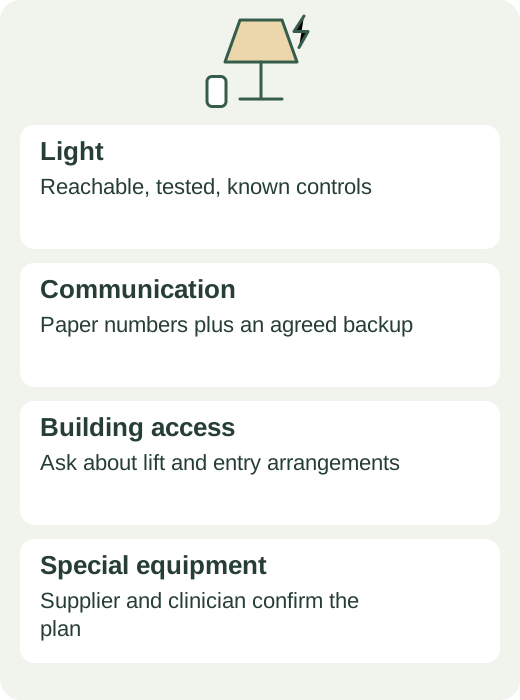
Light
Reachable, tested, known controls
Communication
Paper numbers plus an agreed backup
Building access
Ask about lift and entry arrangements
Special equipment
Supplier and clinician confirm the plan
Print a blank copy to write by hand, or fill it in on this page before printing. Give the completed copy only to people your parent has agreed may see it. The checklist records preparation; it does not score safety or verify a medical decision.
Common questions
Is this a complete disaster kit?
No. It covers a household outage conversation. Use local emergency guidance for the supplies and arrangements needed in your area.
Can I choose a backup for medical equipment here?
No. Ask the equipment supplier and clinician for a device-specific plan.
Who should deal with a wiring fault?
Contact the utility, building manager, or a qualified electrical professional as appropriate. This is not a repair manual.
Source and scope
Ready.gov: Disaster preparedness guide for older adults
Background on preparing supplies and a support network. Follow local emergency instructions; medical equipment needs a plan from its supplier and care team.
The examples and worksheets are original household planning tools. For symptoms, medication decisions, or other medical questions, contact a doctor.