
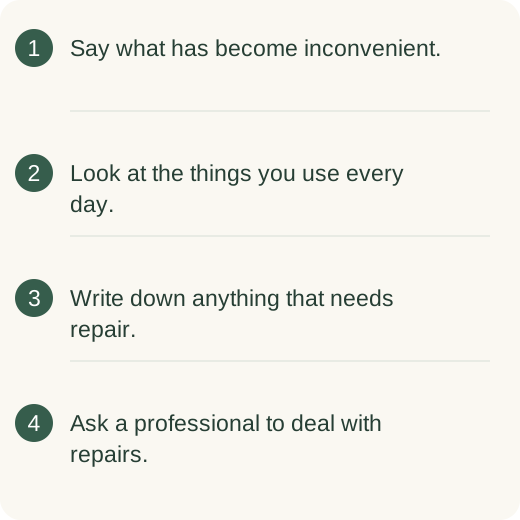
1Say what has become inconvenient.
2Look at the things you use every day.
3Write down anything that needs repair.
4Ask a professional to deal with repairs.
Ask what changed since the last visit
Start with a question rather than a score: “Is anything harder to use than last time?” New furniture, deliveries, seasonal storage, or an altered routine may change the home even when no major work has been done. Let your parent choose the first place to look.
For a first full room-by-room review, use the existing fall-prevention checklist. This shorter review is for changes and follow-through. It does not assess a person’s health or certify that the home is safe.
Look at ordinary use without stress-testing anything
Check whether the usual lights work, handles operate normally, and everyday items remain within the agreed places. Look for visible damage and ask about things that feel loose or awkward. Do not tug a support, climb, or ask your parent to repeat a difficult movement to demonstrate a fault.
Keep inspection or servicing tasks tied to the manufacturer’s instructions and qualified help. A family observation can identify a concern to report, but it cannot establish that an installation is sound.
Distinguish booked from repaired
Find the previous note and ask what actually happened. Separate “called,” “visit booked,” “work done,” and “follow-up needed.” Record the service contact and where the work record is kept. A paid invoice alone does not tell the family whether the original problem has been resolved.
If the work is complete, ask the installer to explain use and maintenance, then ask your parent whether the arrangement is convenient in ordinary use. Refer technical defects back to the professional rather than trying to repair them during the visit.
Agree the next review instead of accumulating a backlog
Choose the next practical step for each unresolved item: request an assessment, ask the landlord, find a service contact, or gather a missing instruction. Ask someone to agree to help before writing their name. Keep the record short enough to use on the next visit.
A monthly reminder can be a convenient family habit, but it is not a technical inspection interval. Follow product guidance for maintenance, and address a new urgent concern when it appears rather than waiting for the next scheduled visit.
Use the worksheet for one real situation
Open the matching sheet below. Review the preparation checklist, then write the information your family needs in the labeled fields. Leave unknown details blank and record who can clarify them.
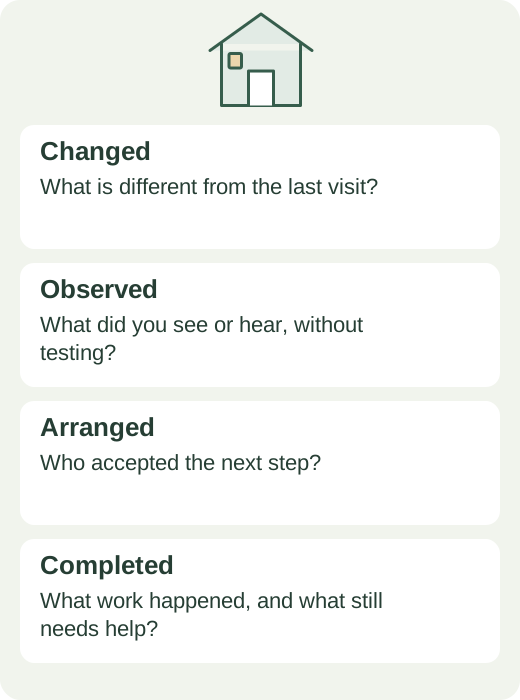
Changed
What is different from the last visit?
Observed
What did you see or hear, without testing?
Arranged
Who accepted the next step?
Completed
What work happened, and what still needs help?
Print a blank copy to write by hand, or fill it in on this page before printing. Give the completed copy only to people your parent has agreed may see it. The checklist records preparation; it does not score safety or verify a medical decision.
Common questions
Must we do this monthly?
No. Choose a useful family routine. Product maintenance and professional inspections follow their own instructions.
Should I tighten a loose support myself?
Arrange qualified assessment or repair. This checklist cannot establish the condition of the mounting.
What if we have never checked the home before?
Start with the room-by-room fall-prevention checklist, then use this sheet to revisit changes and unfinished repairs.
Source and scope
Background on making homes easier to use. Our maintenance notes and quote-comparison fields are editorial tools, not building specifications or price estimates.
The examples and worksheets are original household planning tools. For symptoms, medication decisions, or other medical questions, contact a doctor.